Mudabbir requires manuscripts submitted to meet international standards for the English language to be considered for publication. Articles are normally published only in English and Indonesian. Manuscripts in Bahasa Indonesia are accepted for review but must be translated into English if the manuscript is to be accepted for publication. For authors who would like their manuscript to receive language editing or proofing to improve the clarity of the manuscript and help highlight their research, Mudabbir recommends the language-editing services provided by the internal or external partners (contact Principal of the Mudabbir for further information). Note that sending your manuscript for language editing does not imply or guarantee that it will be accepted for publication by the Mudabbir. Editorial decisions on the scientific content of a manuscript are independent of whether it has received language editing or proofing by the partner services, or other services.
Language Style
The default language style at Mudabbir is Indonesian. If you prefer your article to be formatted in British, please specify this on your manuscript on the first page.
Search Engine Optimization (SEO)
There are a few simple ways to maximize your article's discoverability. Follow the steps below to improve the search results of your article:
Include a few of your article's keywords in the title of the article;
Do not use long article titles;
Pick 5 to 8 keywords using a mix of generic and more specific terms on the article subject(s);
Use the maximum amount of keywords in the first 2 sentences of the abstract;
Use some of the keywords in level 1 headings.
Title
The title is written in title case, align to the left, and in 20 points bold Gentium Basic font at the top of the page. The title should be concise, omitting terms that are implicit and, where possible, be a statement of the main result or conclusion presented in the manuscript. Abbreviations should be avoided within the title.
Witty or creative titles are welcome, but only if relevant and within the measure. Consider if a title meant to be thought-provoking might be misinterpreted as offensive or alarming. In extreme cases, the editorial office may veto a title and propose an alternative.
Authors should try to avoid, if possible:
Titles that are a mere question without giving the answer.
Unambitious titles, for example, starting with "Towards", "A description of", "A characterization of", "Preliminary study on".
Vague titles, for example, starting with "Role of...", "Link between...", "Effect of..." that do not specify the role, link, or effect.
Include terms that are out of place, for example, the taxonomic affiliation apart from the species name.
Authors and Affiliations
All names are shared and separated by commas. Please provide the correct author's name, because this will be indexed in the official archive. Affiliates must be entered in the author's name with a superscript number and are listed as follows: Institute / University / Organization, Country (without detailed address information such as city postal code or street name). Example: State Islamic University (UIN) Mataram, Indonesia. The right writer must be marked with a superscript. Provide the exact contact email address of the author concerned in a separate section under affiliation.
Title and Sub-title
Take advantage of the title and use every word from the subtitle. The title must be defined in bold DeVinne Txt BT and subheadings defined in DeVinne Txt BT, 12, bold.
Abstract
As a primary goal, abstracts must provide general meaning and conceptual progress from works that are accessible to a wide audience. In the abstract, minimize the use of abbreviations and don't cite references. The abstract text must be within 10 points of normal BT DeVinne Txt. A word length of no more than 150-250 words, written in Indonesian and English.
Keywords
All types of articles: You can provide up to 3-5 keywords; at least 3 is mandatory.
Text
Fill text in 12 points Gentium Basic. The new paragraph will be separated by one blank line. All documents must be 1.5 spaces and must contain page numbers and lines to facilitate the review process. The text recommended by Mudabbir was written using MS-Word 97-2003.
Nomenclature
The use of abbreviations must be kept to a minimum. Non-standard abbreviations must be avoided unless they occur at least four times, and are defined in the first use in the main text. Also consider giving a list of non-standard abbreviations at the end, right before the Acknowledgments.
Part
Your text is organized by post and subheading.
For Original Research Articles, it is recommended to arrange your manuscript in the following sections:
Introduction
The introduction is a little different from a brief and concise abstract. The reader needs to know the background of your research and, most importantly, why your research is important in this context. What are the important questions that your research addresses? Why should the reader be interested?
The purpose of the Introduction is to stimulate reader interest and to provide the relevant background information needed to understand this entire paper. You must summarize the problem to be addressed, provide the background to the subject, discuss previous research on the topic, and explain exactly what the paper will discuss, why, and how. A good thing to avoid is making your introduction a minireview. There is a lot of literature out there, but as a scientist, you should be able to choose the things that are most relevant to your work and explain the reasons. This shows the editor/reviewer/reader that you understand your area of research and that you can get right to the most important issues.
Keep your Introduction to be very concise, well structured, and inclusive of all the information needed to follow the development of your findings. Do not over-burden the reader by making the introduction too long. Get to the key parts other paper sooner rather than later.
Tips:
Begin the Introduction by providing a concise background account of the problem studied.
State the objective of the investigation. Your research objective is the most important part of the introduction.
Establish the significance of your work: Why was there a need to conduct the study?
Introduce the reader to the pertinent literature. Do not give a full history of the topic. Only quote previous work having a direct bearing on the present problem. (State of the art, relevant research to justify the novelty of the manuscript.)
State the gap analysis or novelty statement.
Clearly state your hypothesis, the variables investigated, and concisely summarize the methods used.
Define any abbreviations or specialized/regional terms.
Provide a concise discussion of the results and findings of other studies so the reader understands the big picture.
Describe some of the major findings presented in your manuscript and explain how they contribute to the larger field of research.
State the principal conclusions derived from your results.
Identify any questions left unanswered and any new questions generated by your study.
Example of novelty statement or the gap analysis statement in the end of Introduction section (after state of the art of previous research survey): "........ (short summary of background)....... A few researchers focused on ....... There have been limited studies concerned on ........ Therefore, this research intends to ................. The objectives of this research are .........".
Be concise and aware of who will be reading your manuscript and make sure the Introduction is directed to that audience. Move from general to specific; from the problem in the real world to the literature to your research. Lastly, please avoid making a subsection in Introduction.
Method
In the Method section, you explain clearly how you conducted your research order to: (1) enable readers to evaluate the work performed and (2) permit others to replicate your research. You must describe exactly what you did: what and how experiments were run, what, how much, how often, where, when, and why equipment and materials were used. The main consideration is to ensure that enough detail is provided to verify your findings and to enable the replication of the research. You should maintain a balance between brevity (you cannot describe every technical issue) and completeness (you need to give adequate detail so that readers know what happened).
Tips:
Define the population and the methods of sampling;
Describe the instrumentation;
Describe the procedures and if relevant, the time frame;
Describe the analysis plan;
Describe any approaches to ensure validity and reliability;
State any assumptions;
Describe statistical tests and the comparisons made; ordinary statistical methods should be used without comment; advanced or unusual methods may require a literature citation, and;
Describe the scope and/or limitations of the methodology you used.
In the social and behavioral sciences, it is important to always provide sufficient information to allow other researchers to adopt or replicate your methodology. This information is particularly important when a new method has been developed or innovative use of an existing method is utilized. Last, please avoid making a subsection in Method.
Result and Discussion
The purpose of the Results and Discussion is to state your findings and make interpretations and/or opinions, explain the implications of your findings, and make suggestions for future research. Its main function is to answer the questions posed in the Introduction, explain how the results support the answers and, how the answers fit in with existing knowledge on the topic. The Discussion is considered the heart of the paper and usually requires several writing attempts.
The discussion will always connect to the introduction by way of the research questions or hypotheses you posed and the literature you reviewed, but it does not simply repeat or rearrange the introduction; the discussion should always explain how your study has moved the reader's understanding of the research problem forward from where you left them at the end of the introduction.
To make your message clear, the discussion should be kept as short as possible while clearly and fully stating, supporting, explaining, and defending your answers and discussing other important and directly relevant issues. Care must be taken to provide commentary and not a reiteration of the results. Side issues should not be included, as these tend to obscure the message.
Tips:
State the Major Findings of the Study;
Explain the Meaning of the Findings and Why the Findings Are Important;
Support the answers with the results. Explain how your results relate to expectations and to the literature, clearly stating why they are acceptable and how they are consistent or fit in with previously published knowledge on the topic;
Relate the Findings to Those of Similar Studies;
Consider Alternative Explanations of the Findings;
State the Clinical Relevance of the Findings;
Implications of the study;
Acknowledge the Study's Limitations, and;
Make Suggestions for Further Research.
It is easy to inflate the interpretation of the results. Be careful that your interpretation of the results does not go beyond what is supported by the data. The data are the data: nothing more, nothing less. Please avoid and makeover interpretation of the results, unwarranted speculation, inflating the importance of the findings, tangential issues or over-emphasize the impact of your research.
Work with Graphic:
Figures and tables are the most effective way to present results. Captions should be able to stand alone, such that the figures and tables are understandable without the need to read the entire manuscript. Besides that, the data represented should be easy to interpret.
Tips:
The graphic should be simple, but informative;
The use of color is encouraged;
The graphic should uphold the standards of a scholarly, professional publication;
The graphic must be entirely original, unpublished artwork created by one of the co-authors;
The graphic should not include a photograph, drawing, or caricature of any person, living or deceased;
Do not include postage stamps or currency from any country, or trademarked items (company logos, images, and products), and;
Avoid choosing a graphic that already appears within the text of the manuscript.
Last, please avoid making a subsection in Results and Discussion.
Conclusion
The conclusion is intended to help the reader understand why your research should matter to them after they have finished reading the paper. A conclusion is not merely a summary of the main topics covered or a re-statement of your research problem, but a synthesis of key points. It is important that the conclusion does not leave the questions unanswered.
Tips:
State your conclusions clearly and concisely. Be brief and stick to the point;
Explain why your study is important to the reader. You should instill in the reader a sense of relevance;
Prove to the reader, and the scientific community, that your findings are worthy of note. This means setting your paper in the context of previous work. The implications of your findings should be discussed within a realistic framework, and;
Strive for accuracy and originality in your conclusion. If your hypothesis is similar to previous papers, you must establish why your study and your results are original.
For most essays, one well-developed paragraph is sufficient for a conclusion, although in some cases, a two or three paragraph conclusion may be required. The another of important things about this section is (1) do not rewrite the abstract; (2) statements with "investigated" or "studied" are not conclusions; (3) do not introduce new arguments, evidence, new ideas, or information unrelated to the topic; (4)do not include evidence (quotations, statistics, etc.) that should be in the body of the paper.
Acknowledgments (Applied since 2018/Vol 2 No 1)
This is a short text to acknowledge the contributions of specific colleagues, institutions, or agencies that aided the efforts of the authors.
Author Contributions Statement (Applied since 2018/Vol 2 No 1)
The Author Contributions Statement can be up to several sentences long and should briefly describe the tasks of individual authors. Please list only 2 initials for each author, without full stops, but separated by commas. In the case of two authors with the same initials, please use their middle initial to differentiate between them (e.g. REW, RSW). The Author Contributions Statement should be included at the end of the manuscript before the References.
References
All citations in the text must be in the reference list and vice-versa. The references should only include articles that are published or accepted. Datasets that have been deposited to an online repository should be included in the reference list, include the version and unique identifier when available. For accepted but unpublished works use "in press" instead of page numbers. Unpublished data, submitted manuscripts, or personal communications should be cited within the text only, for the article types that allow such inclusions. Personal communications should be documented by a letter of permission.
In-text citations should be called according to the surname of the first author, followed by the year. For works by 2 authors include both surnames, followed by the year. For works by more than 2 authors include only the surname of the first author, followed by et al., followed by the year. For assistance please use management reference (Mendeley or Zotero) and utilize the format of American Psychological Association 6th Edition.
Article in a print journal:
Maba, A. P. (2017). Paradoxical intervention dalam bimbingan dan konseling untuk mengatasi kecemasan. Counsellia: Jurnal Bimbingan Dan Konseling, 7(2), 99=109.
Article in an online journal:
Maba, A. P. (2017). Paradoxical intervention dalam bimbingan dan konseling untuk mengatasi kecemasan. Counsellia: Jurnal Bimbingan Dan Konseling, 7(2), 99-109. https://doi.org/10.25273/counsellia.v7i2.1852
Article or chapter in a book:
Hambleton, R. K. (2005). Issues, designs and technical guidelines for adapting tests into multiple languages and cultures. In Adapting educational and psychological tests for cross-cultural assessment (pp. 3-38). Mahwah, NJ, US: Erlbaum.
Book:
Baron, R. A. (1977). Human Aggression. Boston, MA: Springer US.
Theses and Dissertations:
Maliki, (2019). Politik sebagai media dakwah era milinerial (Skripsi). Universitas Islam Negeri (UIN) Mataram, Lampung.
Supplementary Material
Mudabbir: Journal Manajmen Dakwah do not support pushing important results and information into supplementary sections. However, data that are not of primary importance to the text, or which cannot be included in the article because it is too large or the current format does not permit it (such as movies, raw data traces, powerpoint presentations, etc.) can be uploaded during the submission procedure and will be displayed along with the published article. Supplementary Material can be uploaded as Data Sheet (word, excel, csv, cdx, fasta, pdf or zip files), Presentation (powerpoint, pdf or zip files), Supplementary Image (cdx, eps, jpeg, pdf, png or tif), Supplementary Table (word, excel, csv or pdf), Audio (mp3, wav or wma) or Video (avi, divx, flv, mov, mp4, mpeg, mpg or wmv). Supplementary material is not typeset so please ensure that all information is clearly presented, the appropriate caption is included in the file and not in the manuscript, and that the style conforms to the rest of the article
do not support pushing important results and information into supplementary sections. However, data that are not of primary importance to the text, or which cannot be included in the article because it is too large or the current format does not permit it (such as movies, raw data traces, powerpoint presentations, etc.) can be uploaded during the submission procedure and will be displayed along with the published article. Supplementary Material can be uploaded as Data Sheet (word, excel, csv, cdx, fasta, pdf or zip files), Presentation (powerpoint, pdf or zip files), Supplementary Image (cdx, eps, jpeg, pdf, png or tif), Supplementary Table (word, excel, csv or pdf), Audio (mp3, wav or wma) or Video (avi, divx, flv, mov, mp4, mpeg, mpg or wmv).
Supplementary material is not typeset so please ensure that all information is clearly presented, the appropriate caption is included in the file and not in the manuscript, and that the style conforms to the rest of the article
Figures and Table Guidelines
General Style Guidelines for Figures
Figures help readers visualize the information you are trying to convey. Often, it is difficult to be sufficiently descriptive using words. Images can help in achieving the accuracy needed for a scientific manuscript. For example, it may not be enough to say, "The surface had nanometer scale features." In this case, it would be ideal to provide a microscope image.
For images, be sure to:
Include scale bars
Consider labeling important items
Indicate the meaning of different colors and symbols used
General Style Guidelines for Tables
Tables are a concise and effective way to present large amounts of data. You should design them carefully so that you clearly communicate your results to busy researchers.
The following is an example of a well-designed table:
Clear and concise legend/caption
Data divided into categories for clarity
Sufficient spacing between columns and rows
Units are a provided font type and size are legible
Figure and Table Requirements
Legends
Figure and table legends are required to have the same font as the main text (12 points normal Times New Roman, single spaced). Legends should be preceded by the appropriate label, for example, "Figure 1" or "Table 4". Figure legends should be placed at the end of the manuscript (for supplementary images you must include the caption with the figure, uploaded as a separate file). Table legends must be placed immediately before the table. Please use only a single paragraph for the legend. Figure panels are referred to by bold capital letters in brackets: (A), (B), (C), (D), etc.
Image Size
Figure images should be prepared with the PDF layout in mind, individual figures should not be longer than one page and with a width that corresponds to 1 column or 2 columns.
Format
The following formats are accepted:
TIFF (.tif) TIFF files should be saved using LZW compression or any other non-lossy compression method. JPEG (.jpg)
EPS (.eps) EPS files can be uploaded upon acceptance
Colour Image Mode
Images must be submitted in the color mode RGB.
Resolution Requirements
All images must be uploaded separately in the submission procedure and have a resolution of 300 dpi at final size. Check the resolution of your figure by enlarging it to 150%. If the resolution is too low, the image will appear blurry, jagged or have a stair-stepped effect.
Please note saving a figure directly as an image file (JPEG, TIF) can greatly affect the resolution of your image. To avoid this, one option is to export the file as PDF, then convert into TIFF or EPS using a graphics software. EPS files can be uploaded upon acceptance.
Details of all funding sources must be provided in the funding section of the manuscript including grant numbers, if applicable.

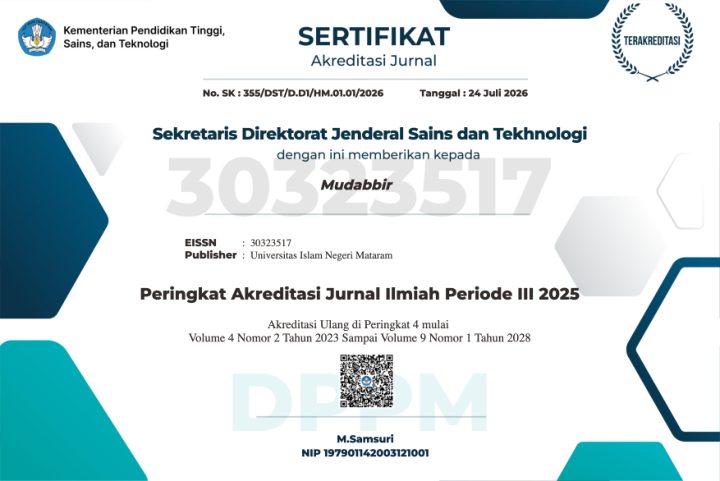 Lihat Sertifikat ↗